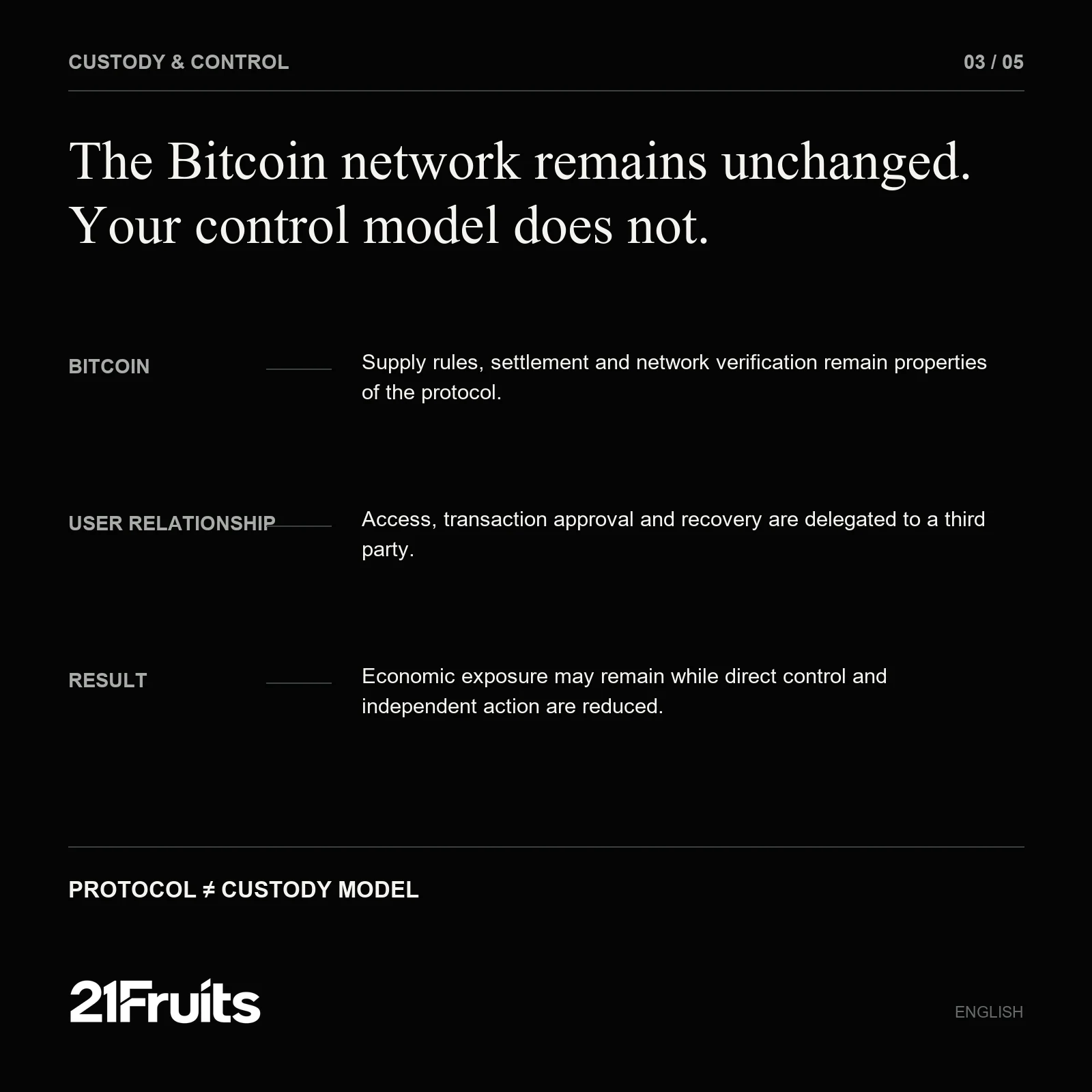
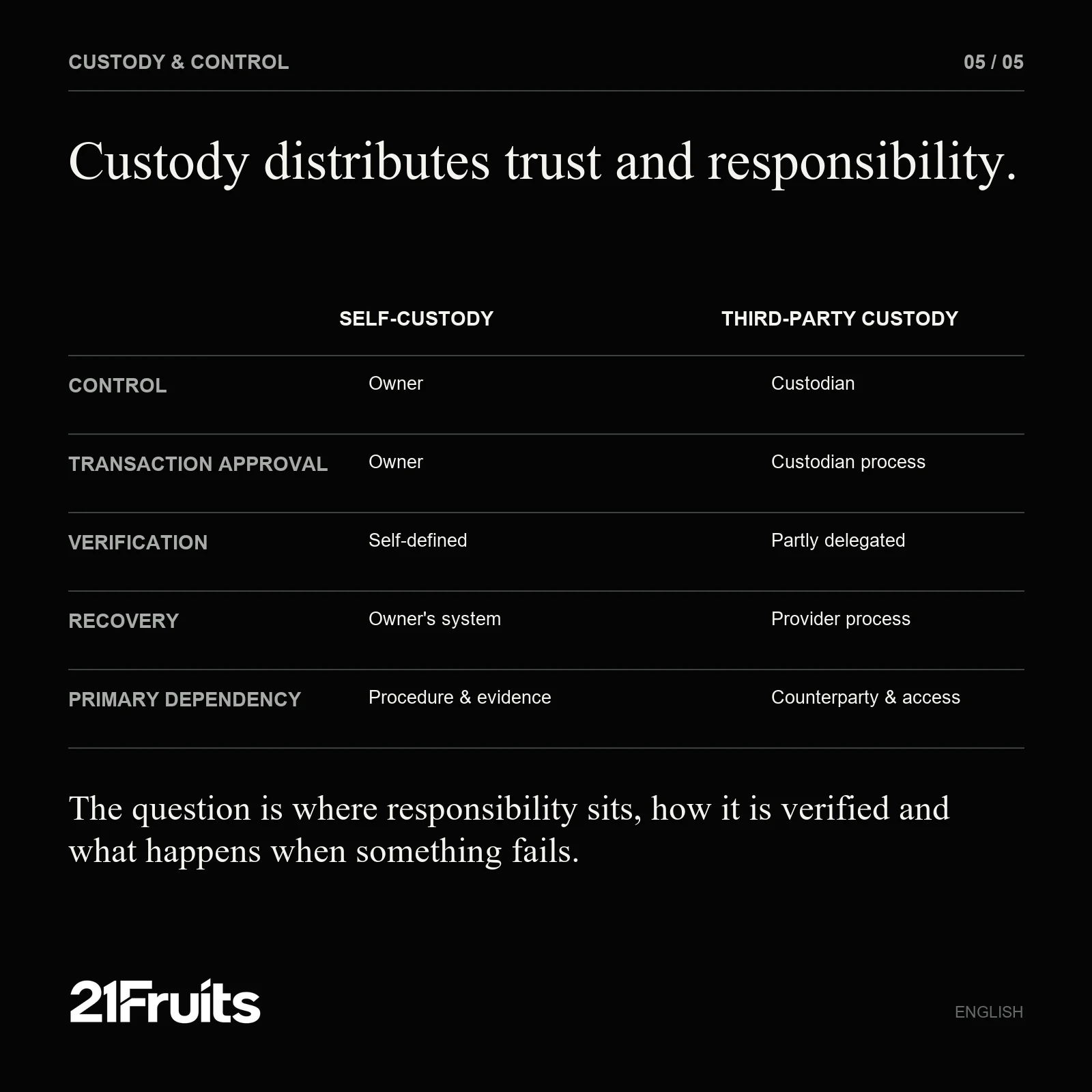
Bitcoin’s protocol properties do not change with the custody model. Control, verification paths, recovery responsibility and failure dependencies do.
21 Fruits Research Note · September 2026
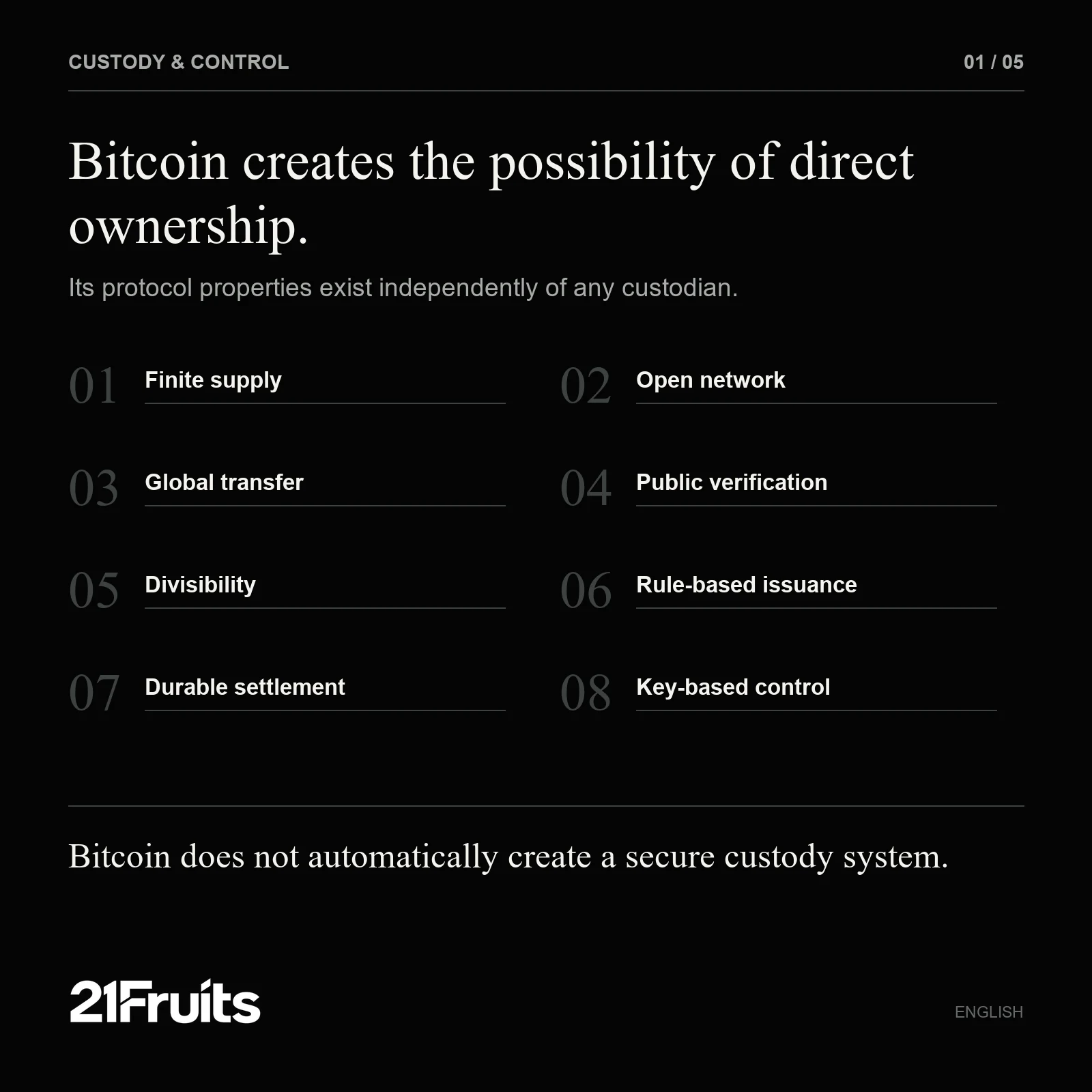
Bitcoin creates the possibility of direct digital ownership. Whether a person can exercise that ownership independently depends on who controls the keys, who authorises transactions, which evidence can be verified and how recovery works when something fails.
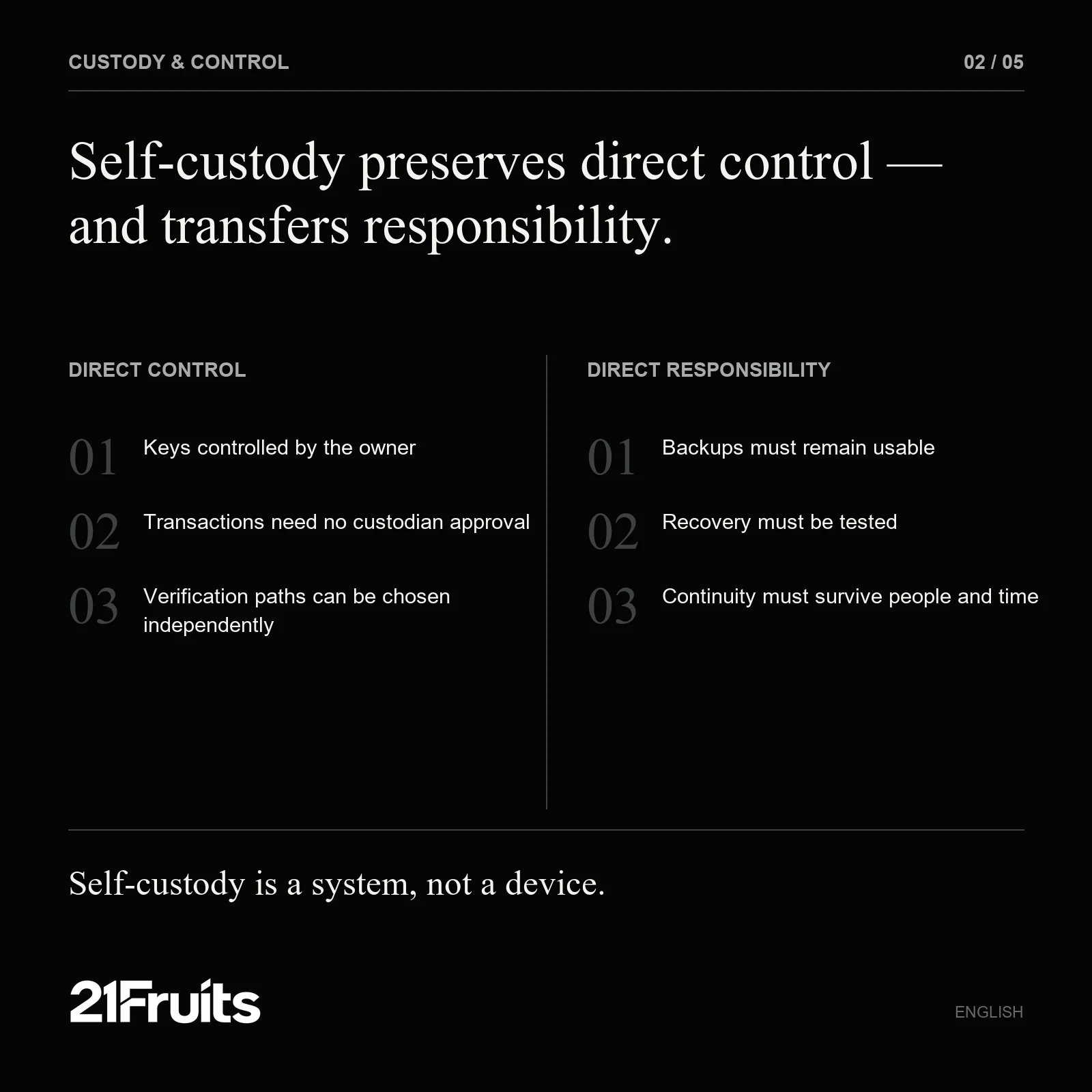
This five-part reference separates properties of the Bitcoin protocol from properties of a custody arrangement. It does not treat either model as a single security outcome. Each distributes trust, authority and operational responsibility differently.
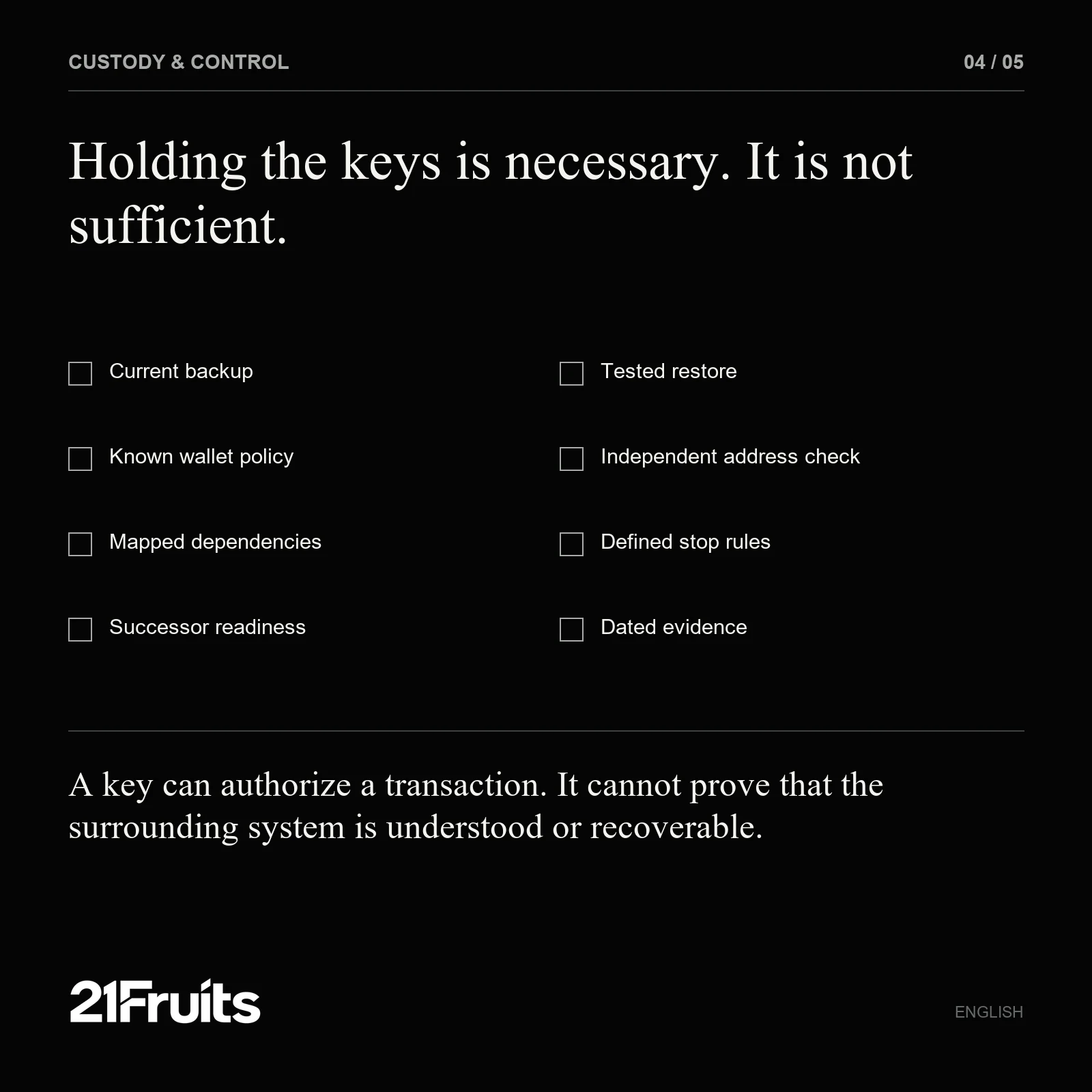
01 · Bitcoin properties. Direct ownership is possible. Secure custody still has to be designed.02 · Self-custody. Direct control and direct responsibility belong to the same system.03 · Third-party custody. The protocol remains unchanged while access, approval and recovery are delegated.04 · Keys are not enough. Key control does not prove that the surrounding system is recoverable.05 · Trust and responsibility. The custody model determines where authority and failure dependencies sit.
21 Fruits principle Evaluate custody by mapping control, verification, recovery and failure dependencies. A label alone is not evidence of readiness.